Oct, 25, 2026, Sunday, Zhejiang
Hotline:0577-6217-8888
Oct, 25, 2026, Sunday, Zhejiang
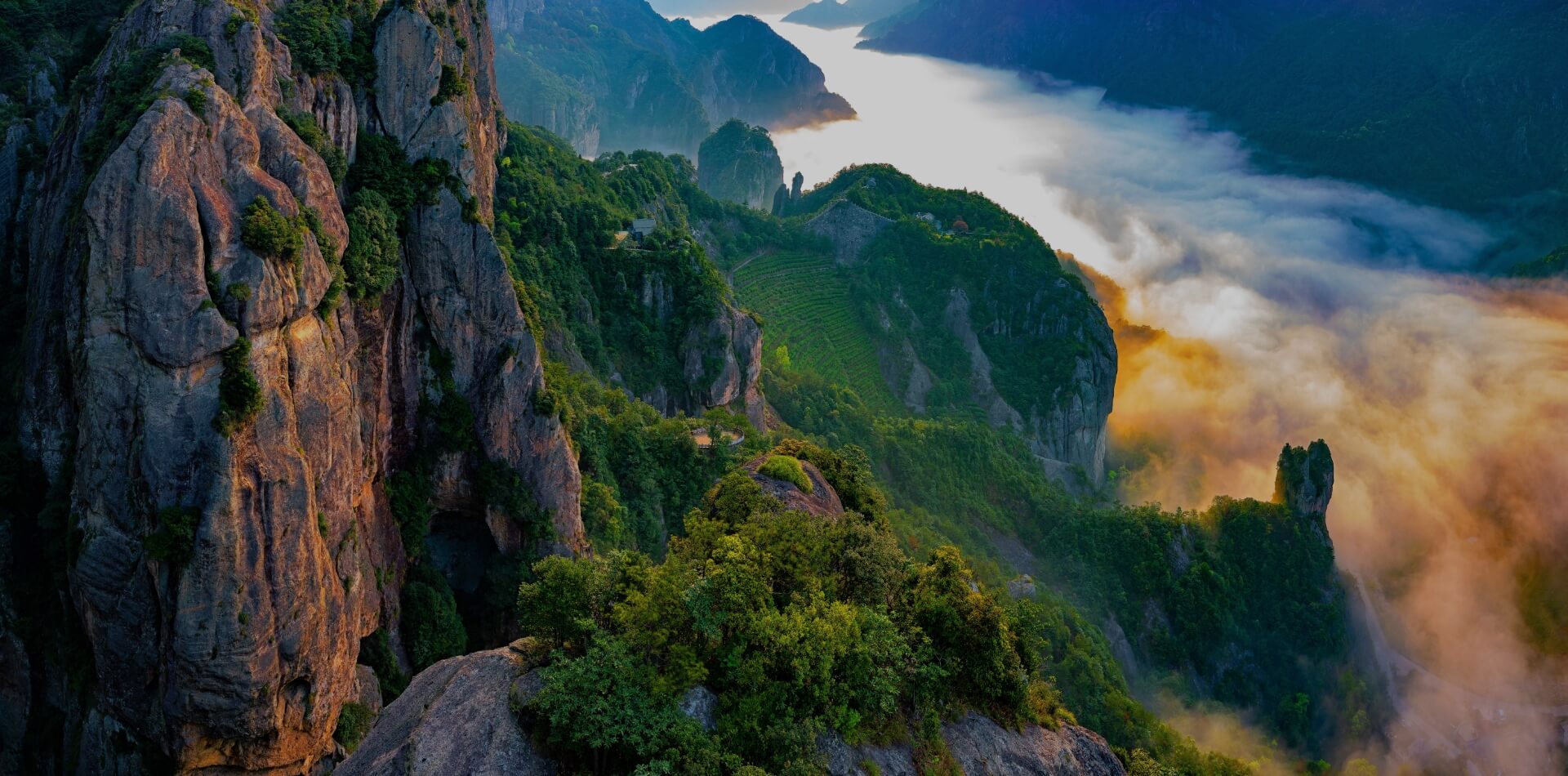 Photographed by Wanyingtian
Swipe down

Introduction
Yandangshan is famous for its spectacular and elegant natural scenery.
Yandangshan is located in Yueqing, Wenzhou, Zhejiang Province. It is a National 5A‑level Tourist Attraction and a UNESCO Global Geopark, enjoying the reputation of “Famous Mountain upon the Sea, Unrivaled Wonder under Heaven”. Formed in the Cretaceous period 120 million years ago, it is a highly representative rhyolitic caldera volcano within the Circum‑Pacific Volcanic Belt. Centered on the “Three Wonders”: Lingfeng Peak, Lingyan Rock and Dalongqiu Waterfall, its eight scenic zones feature over 500 landscapes of peculiar peaks, plunging waterfalls, secluded caves and ancient cliff ramparts. First developed during the Southern and Northern Dynasties, it flourished in the Tang Dynasty and reached its golden age in the Song Dynasty. Over a thousand years, numerous poems by literati and cliff‑carved inscriptions have been preserved. As a renowned mountain in Southeast China, it integrates superb landscape aesthetics, distinctive geological values and profound historical heritage.
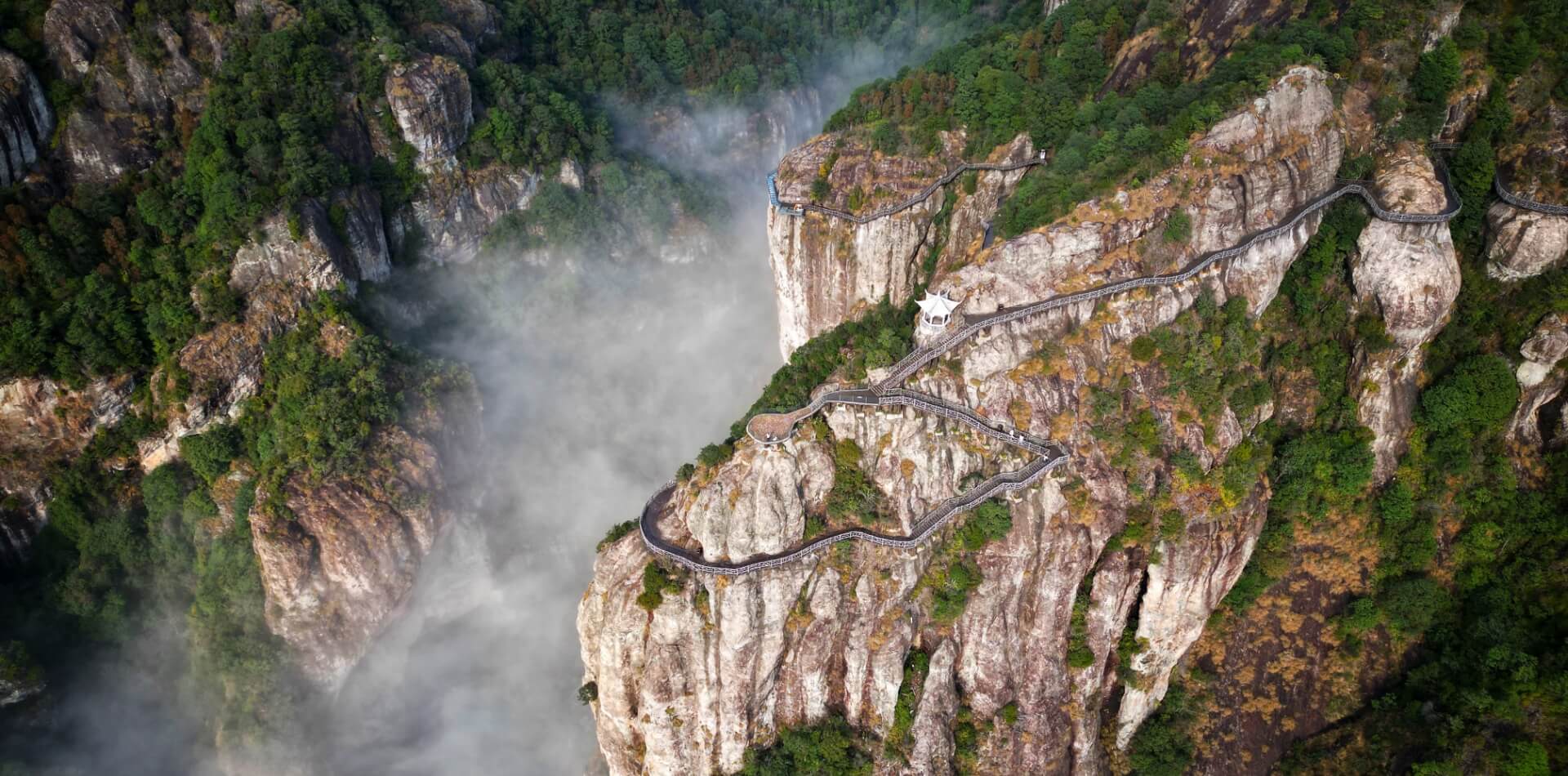 Photo by Ye Jintao
Yandangshan development as a scenic attraction began in the Northern and Southern Dynasties, flourished in the Tang Dynasty, and reached its prime in the Song Dynasty.
The development of Mount Yandang began in the Northern and Southern Dynasties, flourished in the Tang Dynasty, and reached its peak in the Song Dynasty.
Crown Prince Zhaoming of the Liang Dynasty (Xiao Tong) founded temples and built pagodas at the foot of the Furong (Lotus) Peak, marking the initial development of the mountain. In the Tang Dynasty, the eminent Indian monk Arahant Mahākāśyapa (Nuojuna), drawn by Yandang's reputation as a "Village of Flowers, Mountain of Birds," came here with 300 disciples to propagate Buddhism. He is revered as the founding patriarch of Yandang Mountain.
By the Song Dynasty, large-scale development unfolded: eighteen temples, ten monasteries, and sixteen pavilions were constructed, ushering in the golden age of Yandang.
Numerous scholars and literati throughout history visited here, leaving behind immortal poems and inscriptions: Xie Lingyun, Guan Xiu, Shen Kuo, Xu Xiake, Kang Youwei, Zhang Daqian, Sha Menghai, Pan Tianshou, Yu Dafu, Guo Moruo, Deng Tuo, Shu Ting, among others. In modern times, Party and state leaders including Jiang Zemin, Li Peng, Zhu Rongji, Qiao Shi, and Li Ruihuan have all inspected Mount Yandang.
Attractions
Scenic Area Coverage
Poems and Paintings
Cliff Inscriptions
Wenzhou Yandang Mountain Scenic Area is a typical representative of Cretaceous volcanoes in the giant volcanic belt along the margin of the Asian continent, with rhyolite from magma forming the main geology of Yandang Mountain. The scenic area has abundant rainfall and a mild climate, with no severe cold in winter and no scorching heat in summer. Yandang Mountain Scenic Area mainly consists of eight major scenic zones: Lingfeng (Spirit Peak), Lingyan (Spirit Rock), Dalongqiu (Great Dragon Pool), Sanzhepu (Three-Tier Waterfall), Yanhu (Wild Goose Lake), Xianshengmen (Magnificent Victory Gate), Yangjiaodong (Ram's Horn Cave), and Xianqiao (Immortal Bridge), featuring over 500 scenic spots. The area is renowned both domestically and internationally for its unique and grotesque peaks and rocks, flying waterfalls and flowing springs, ancient caves and strange caverns, majestic ridges and grand gateways, and verdant pools. Among them, the three scenic zones of Lingfeng, Lingyan, and Dalongqiu are known as the "Three Wonders of Yandang."
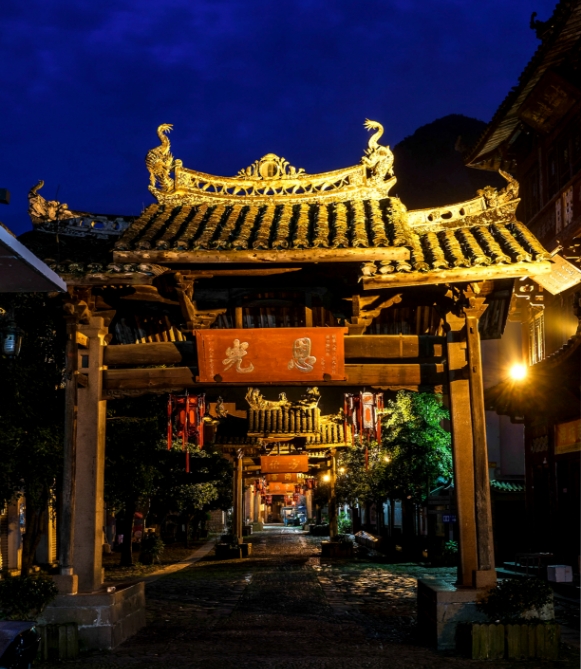 Photo by Lu Yongshun
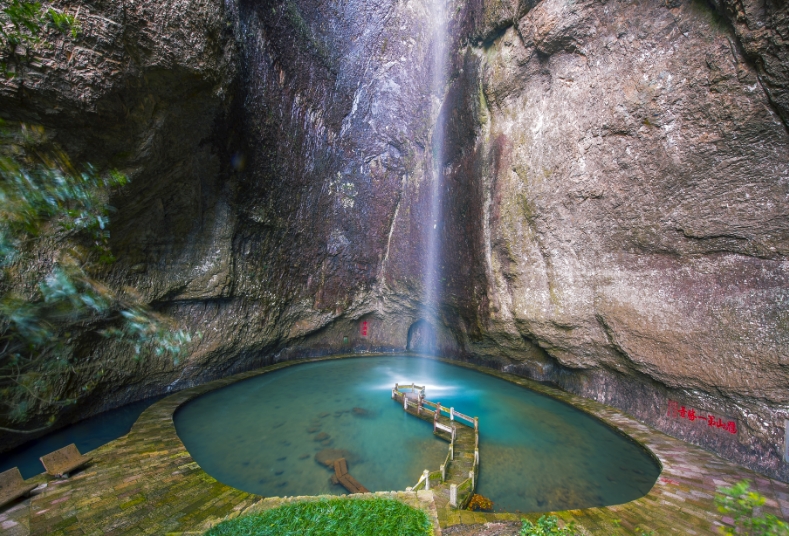 Photo by Chen Xiangzhi
On November 8, 1982, Wenzhou Yandangshan Scenic Area was listed by the State Council among the first batch of national key scenic areas.
In 2005, Yandangshan was named a UNESCO World Geopark in the second batch.
In May two years later, Yandangshan was rated as a National AAAAA Tourist Attraction.